
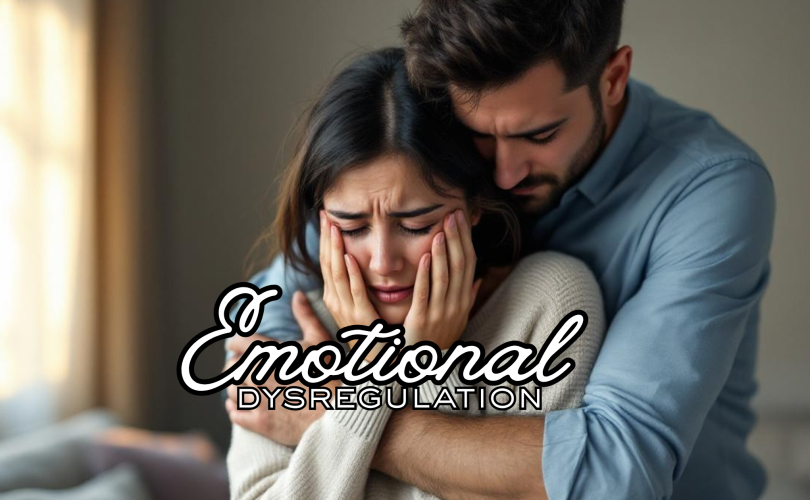
In today’s culture, the phrase “you’re being emotional” is often hurled like a weapon — a dismissal, a shutdown, a way to invalidate someone’s feelings without engaging with the truth beneath their words. Once, emotions were recognized as natural, essential signals from our mind, body, and nervous system. Now, displaying them openly is frequently framed as weakness, immaturity, or instability. Society learned to equate emotionality with irrationality — ignoring the fact that emotions are simply information: messages alerting us to needs, boundaries, and experiences that require attention.
Somewhere along the way, we stopped listening.
Why Society Misunderstands Emotional Expression
For generations, emotional expression was coded with cultural rules. Strength was equated with silence. Vulnerability was reframed as fragility. Children were told to “stop crying”, “toughen up”, or “get over it”, teaching them that tears, fear, and hurt were unacceptable. Over time, society normalized dismissing emotions as inconvenient, labeling them with the convenient shorthand of “emotional”.
The result? Emotional dysregulation became stigmatized. People were shamed for reactions that were, in reality, perfectly human responses to stress, trauma, or overwhelm.
Emotional Dysregulation Is Not “Being Too Emotional”
Emotional dysregulation is not a character flaw or a sign of weakness. It is a nervous system response — a signal that internal stress, trauma, or triggers have exceeded a person’s window of tolerance. Their body is overwhelmed, not because they are “too sensitive,” but because their brain is activating survival mechanisms faster than their conscious coping strategies can respond.
Yet society often teaches people to criticize the reaction instead of understanding its origin. When someone cries, panics, shuts down, or expresses intense feelings, they are frequently labeled as:
- too sensitive
- dramatic
- overreactive
- unstable
- emotional
Language like this shames the nervous system, signaling: “You’re alone. Handle this yourself.”
Humans were never designed to regulate alone.
Co-Regulation: The Relational Skill Society Forgot
From infancy, our nervous systems are shaped through connection and co-regulation. Caregivers soothe, mirror, and stabilize us — we learn emotional regulation through the presence of others. This biological truth does not vanish when we become adults. Emotional support, attunement, and co-regulation remain vital for maintaining safety, intimacy, and healthy nervous system functioning.
Co-regulation is not about fixing, controlling, or solving someone else’s emotions. It is about offering:
- a grounded presence instead of walking away
- a soft, calm tone instead of escalation
- physical or energetic grounding when the nervous system is activated
- reassurance that “You are safe, you are seen, and you are not alone”
Meeting dysregulated emotions with calm and compassion teaches the nervous system safety, reduces reactivity, and transforms relationships into healing spaces.
How to Practice Co-Regulation in Relationships
1. Respond, Don’t React
When your partner is dysregulated, your initial instinct may be triggered. Co-regulation asks you to pause, breathe, and respond from a grounded place. Your calm presence becomes the anchor they borrow until they regain their own equilibrium.
Example:
Instead of saying, “You’re overreacting,” try:
“I see this is hard. I’m here. Let’s breathe together.”
2. Use Your Voice as a Safety Signal
Tone communicates safety or danger faster than words. Speaking slowly, softly, and steadily signals: “You are safe. I am not your threat.”
3. Offer Physical Grounding (With Consent)
Touch is a primal form of co-regulation: holding hands, hugging, or sitting side-by-side communicates: “You do not face this alone.”
4. Mirror Calm Breathing
Breathing together recalibrates the nervous system. Slow, intentional inhalation and exhalation can help your partner unconsciously match your rhythm, reducing overwhelm and panic.
5. Validate Internal Experience
Validation is not agreement — it is acknowledgment:
- “I see this is really hard for you.”
- “Your feelings matter to me.”
- “I am here and I am not leaving.”
6. Slow Down the Pace
When emotions are intense, the brain can only process information slowly. Speaking gently, pausing between sentences, and providing space encourages clarity over reactivity.
7. Build Predictable Connection Rituals
Co-regulation thrives in consistency. Small, repeated practices — morning check-ins, evening debriefs, intentional affection, shared quiet time — foster safety, intimacy, and trust over time.
8. Repair After Misattunement
Everyone makes mistakes. Co-regulation includes returning to safety after rupture, apologizing, and reconnecting:
“I’m sorry I didn’t show up fully. How can we reconnect right now?”
Repair strengthens trust and demonstrates that relationships can remain secure even after conflict.
Why Emotional Dysregulation Deserves Compassion, Not Criticism
Calling someone “emotional” is not neutral observation — it is a dismissal. It communicates: “I don’t want to deal with your feelings,” or “Your emotions make me uncomfortable.”
The truth is, emotional presence requires strength: the courage to feel, express, and stay open even when it is easier to shut down. Emotional dysregulation is a call for connection, not a personal failing. When met with patience, empathy, and co-regulation, it becomes an opportunity for healing, growth, and deepened relational intimacy.
Reframing the Cultural Narrative
Imagine a world where we replaced judgment with curiosity:
- “I notice you’re upset. Can I stay with you while you process this?”
- “Your emotions are valid, and I’m here to help you feel safe.”
By learning to see dysregulation as a signal for connection, we not only heal individual relationships — we begin to repair the emotional wounds of entire generations, dismantling shame around feeling deeply and authentically.
How Maitriama Supports Emotional Understanding and Co-Regulation
Maitriama’s work integrates nervous system science, trauma-informed coaching, and conscious relationship practices to help individuals and couples reframe emotional dysregulation. She teaches partners to:
- recognize triggers without judgment
- attune and co-regulate safely
- create consistent rituals for emotional safety
- repair ruptures with empathy and humility
- cultivate vulnerability without shame
Through her guidance, emotionality is no longer a liability — it becomes a pathway to intimacy, trust, and secure relational bonds.
When we learn to honor emotions, co-regulate effectively, and show up fully for one another, emotional expression becomes a bridge, not a barrier, transforming relationships and restoring the human capacity for connection.